News Room
Press Release – Hydrogen Economy: Featured Technologies and Products (No. 82) Woojin Industrial Systems’ Hydrogen Fuel Cell Low-Floor Bus
- Name 관리자
- Date 2025.11.05
- Look 5333
- Files (첨부없음)
Launched the Apollo 900 H2 after two years of development
Focused on weight distribution and passenger space optimization
Equipped with Toyota’s second-generation fuel cell, with plans for future diversification
Factory automation rate of 40%, maintaining high quality through multiple systems
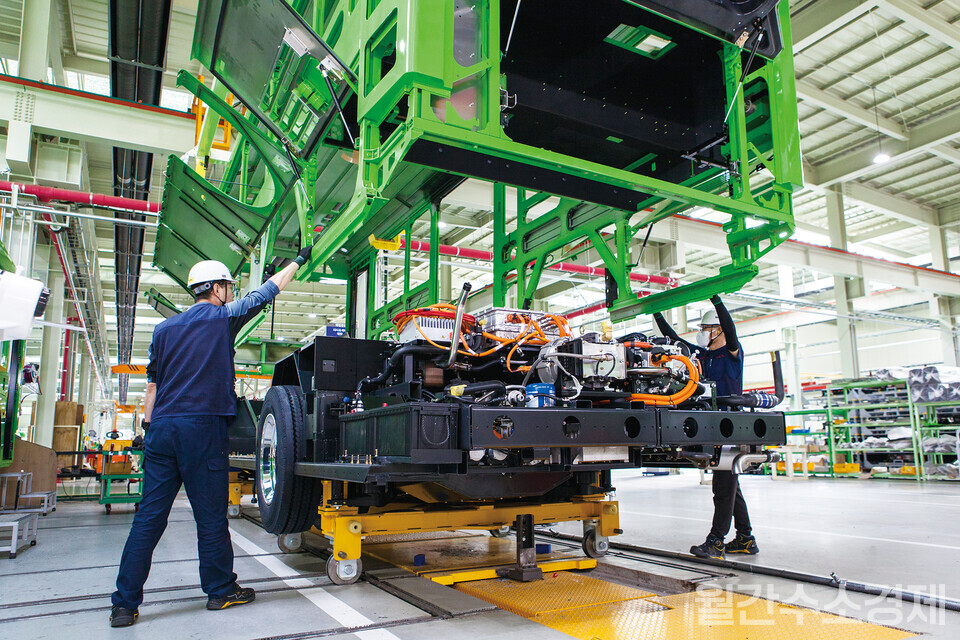
Workers are assembling Woojin Industrial Systems’ hydrogen electric bus. (Photo by Sung Jae-kyung)
A new competitor has emerged in South Korea’s hydrogen bus market, which has so far been dominated by Hyundai Motor Company
— Woojin Industrial Systems, a manufacturer of railway vehicles and buses.
Just before the Chuseok holidays, Woojin Industrial Systems completed all certification procedures, including emission and noise certifications from the Ministry of Climate, Energy and Environment, and began full-scale sales at the end of October.
This comes about two years after the company began developing its hydrogen bus.
To take a closer look at the hydrogen bus that may put pressure on Hyundai, we visited Woojin Industrial Systems’ electric bus plant in Gimcheon, North Gyeongsang Province.
--- Text omitted ---
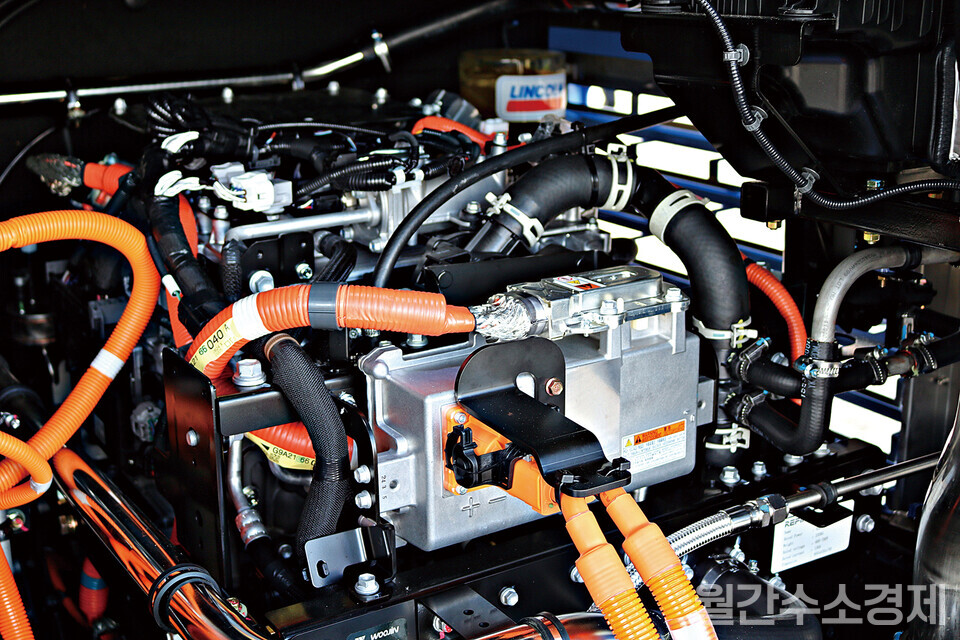
There is a possibility that Toyota’s third-generation fuel cell could be installed, depending on future circumstances.
This next-generation fuel cell has improved key materials and cell structure, resulting in twice the durability and 1.2 times higher fuel efficiency compared to the second generation.
Toyota is expected to launch its third-generation commercial vehicle fuel cell as early as 2027.
As Toyota is forming partnerships with multiple companies to expand the market for its third-generation fuel cell systems, it is anticipated that the company will decide on supplying these systems based on Woojin Industrial Systems’ future progress.
Vice President Kwang-Seok Kim said, “When we first proposed sourcing fuel cell stacks, Toyota reportedly thought we were only conducting a small-scale pilot test.
However, when we released a mass-production model just two years after starting development, they were surprised — it was a completely unexpected move.
Since then, their attitude has changed significantly; they even visited us directly to discuss fuel cell supply.”
Woojin Industrial Systems is currently working on internalizing the development and mass production of its own BOP (Balance of Plant, or power system).
Once this process is completed, the company is expected to diversify partnerships with multiple fuel cell suppliers.
For its battery system, the company adopted a 78 kW cylindrical lithium-ion battery featuring high-efficiency charge and discharge characteristics to respond instantly to the relatively slow output reaction of the fuel cell.
In particular, a battery management system (BMS) jointly developed with KAIST was applied, securing differentiated competitiveness in terms of safety, energy efficiency, and extended lifespan.
A thermal management system for battery temperature control was also implemented to ensure optimal performance and reliability during operation.
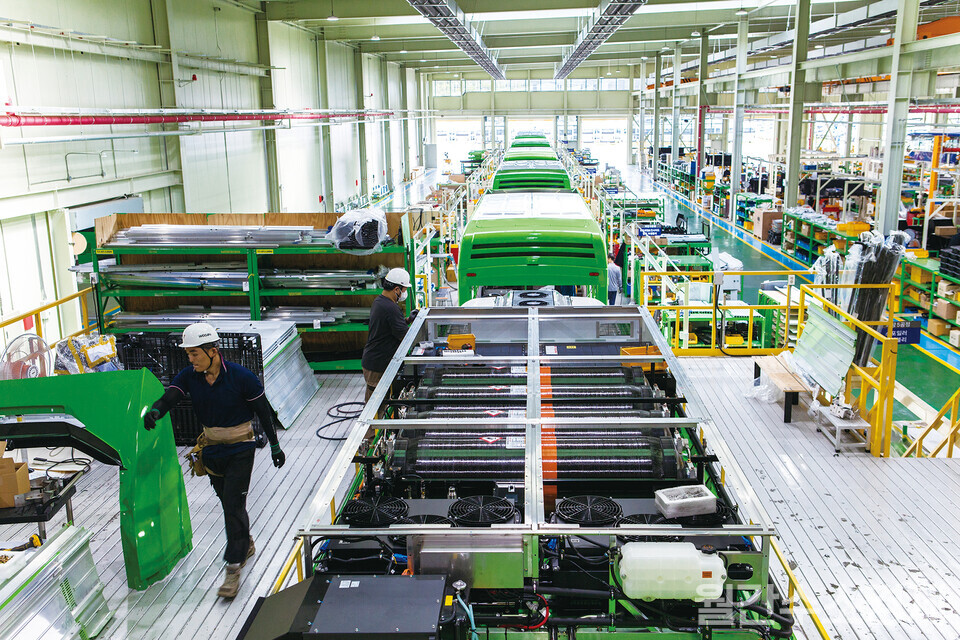
The hydrogen storage system installed in the Apollo 900 H2. (Photo by Sung Jae-kyung)
The Apollo 900 H2 is equipped with four Type 4 hydrogen storage tanks supplied by DS AETHER CT Co., Ltd., providing a total storage capacity of 28.8 kg.
With this configuration, the Apollo 900 H2 achieves a driving range of 708 km on a full charge, with fuel efficiency rated at 24.6 km per kilogram of hydrogen.
Once all assembly work is completed, the vehicle undergoes quality testing at the test track adjacent to the factory.
If no issues are found in customer specifications or assembly quality, the bus is then delivered to the client.
Woojin Industrial Systems plans to produce 40 hydrogen buses this year, mainly to be supplied to transportation companies in Incheon.
Next year, the company aims to manufacture and deliver approximately 150 units of the Apollo 900 H2 equipped with a 120 kW fuel cell system to its customers.
Source: Monthly Hydrogen Economy (https://www.h2news.kr)
- THE END -
 List
List
| Prev | DS AETHER CT, selected as a 'Top Materials, Parts, and Equipments(MSB) Enterprise' |
|---|---|
| Next | Press Release - DS AETHER CT Co., Ltd., Co-CEO 'SUKJOO(Steven) HWANG' |